I was going to call this essay “Please, Shoot My Bullet Journal,” but then I got Covid and now I’m a Long-Hauler, which means I’m no longer contagious but have nearly 20 symptoms due to inflammation, some, like fatigue, dizziness, loss of appetite, and difficulty walking, migrated from the original virus. Still with me? I promise, this is not a pity-party.
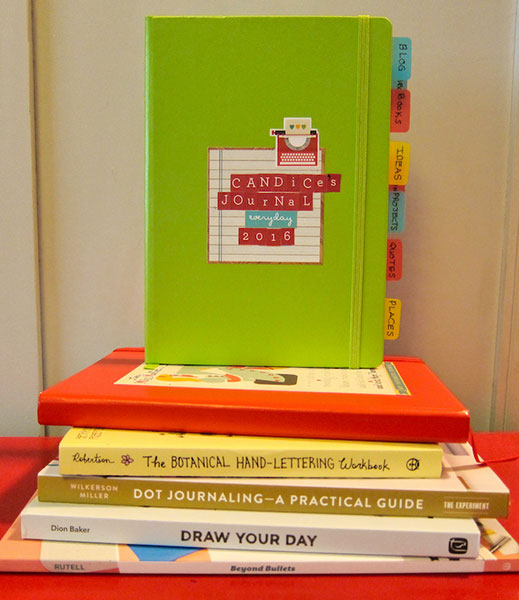
Back to the Bullet Journal. These became a big deal in 2016. Suddenly everyone was buying Leuchitturm 1917 dot-grid journals and Pigma Micron pens, organizing their busy lives with an old-school system devised by Ryder Carroll. BuJo, to use the common term, is part planner, part diary, and completely customizable, based on simple symbols like circles, dots, and squares, and unfinished tasks you migrate from one place to the next, yet you see progress. As a writer and stationery junkie, I fell hard for Bullet Journaling.
My stationery craze dates to third grade when the insurance man came to our house. He kept his papers in a red vinyl folder I itched to steal. Years later, after I became a published writer, I trooped to the January 1987 meeting of my writing group with my new DayRunner, and announced, “You must get one!” The other members were 11 to 20 years older than me and up till then had been managing their lives perfectly fine. Yet I extolled the virtues of my amazing organizer with enough inserts and charts to run Liechtenstein.
That day after the meeting, I learned my stepfather, the man who raised me, had been sent home to die. There was no DayRunner insert to plan for the unknown weeks and months ahead.
In 2013, I turned to the Passion Planner, “a paper planner to help focus on what really matters.” It had pages for 5‑year planning, creativity, and room for dreaming. I used Passion Planners, on and off, for two years, never quite realizing my future. Next, I created my own planner in a 3‑ring binder. Then I dropped into the Bullet Journal pit. I bought all the stuff — books, stickers, colored pens, a template so I could draw curly banners. And that was my downfall.
I found myself looking at pictures of other people’s beautiful journal pages: floral headers, artful Venn diagrams — one person drew the books she’d read in a watercolor bookcase! I wanted to do this, too, so badly it made me unhappy. Really, my life isn’t that important. I hardly leave my house. As for customized calendars — menu schedules and lists of movies — how could I plan for the long year it took my brother-in-law to die, or last year when we learned my sister has inoperable cancer? How could I promote my two new 2021 novels — planned six months ahead of time — when my husband had an emergency quad bypass and two lung operations?
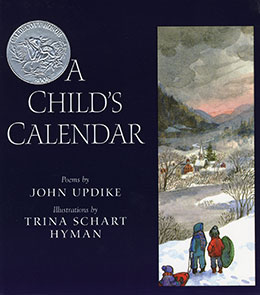
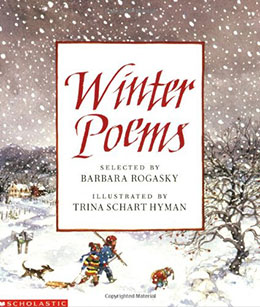
Each January, I pull three books off my shelves: A Child’s Calendar: Poems by John Updike, illustrated by Trina Schart Hyman, Winter Poems, selected by Barbara Rogasky, illustrated by Trina Schart Hyman, and Hal Borland’s Book of Days. These books sit on the chest in our library, across from the waterfall dresser decorated for winter with holly, pinecones, crow and buzzard feathers under a tall glass dome, a gray fossil backbone of an ancient whale, my lovely Carol Endres rabbits-in-the-snow framed print watching over it all.
I sit in our library and read Updike’s words for “January”:
The days are short,
The sun a spark,
Hung thin between,
The dark and dark.
I walk around inside Hyman’s illustrations and gorgeous borders in Winter Poems, all featuring her home, her neighbors, her pets, her family. I make peace with our most unloved month.
This year, Hal Borland’s Book of Days migrates upstairs with me to read during my afternoon rest and before bed. It’s a daily journal beginning January 1, written from his farm in rural Connecticut, meant to help him answer the questions: Who am I? Where am I? What time is it? At 68, I ask those questions, too. Borland’s entries mix mid-70s science with New England lore, his natural observations of the seasons with his own quiet musings.
January 6: Frost flowers fascinate me. They are related to frost ferns, those intricate patterns that formed on windowpanes before we slept in heated bedrooms. Frost ferns were indoor plants, created by the humidity in the room. Frost flowers are wildlings, outdoor grows created by humidity in the starlight.
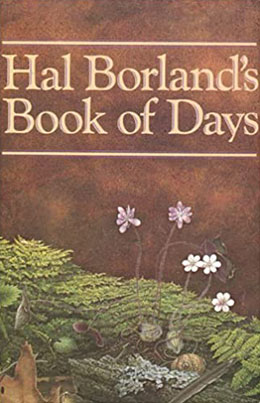
Ever since I bought this book for $10, new, in 1976, I’ve wanted to be Hal Borland, to write about what I see and think about, not about what I did that day or should do tomorrow. This feeling is strongest in January. When I can walk better, I’ll go outside to look for frost flowers made by starlight. When the strength comes back in my fingers, I’ll keep a real journal and start answering those questions.
I, too, am easily seduced with new planners. Perhaps I’ll try POETRY instead this year. ;0) Thanks for a lovely essay. I wish you and yours good health in the coming year.….
Poetry is an excellent idea! A poem a week is a doable plan! No – wait! Don’t think in terms of “plan,” just write!
Oh, Candice ~ I’m so sorry your symptoms have continued. I have experience with recovering from a long-term illness. The most important advice I got from a doctor was to stay in the moment and not project how long it would last.
What I really wanted, was a letter from the universe telling me the exact date I would feel better. That letter never came, but I did regain my strength, and I am grateful for good health daily. Thank you for your honesty and for writing so beautifully.
April: Oh, how I want a letter, too. Staying in the moment – at this very moment in national turmoil – is hard, but I think you’re right. Per your doctor’s advice, sent my way by you, I’ll write my own letter and send it not just to myself, but to all who are sick with Covid, and sick at heart. Thanks for your good wishes.
Thank you for your journal article. Wishing you all the best during your recovery.
Also, have you read WINTERING: The Power of Rest & Retreat In Difficult Times by Katharine May? I just finished it and found it Very Helpful and a lovely read, to boot.
A lovely essay. Thank you. I hope you soon recover completely.
Thank you all for such lovely writing, thoughts on planner obsessions (happy planner for me), and inspiration. I wish health and happiness for you all.
Candice,
First, I am sending huge airwaves loaded with wellness wishes. And, I know that your embrace of your favorite and inspiring and calming words and images will help you heal. Is that not the wonderful reason why we write, read, draw? To touch the human spirit, to uplift, to garner and share a smile or share a strength or an introspection is the great strength and gift of humankind. Savor the pages, gather strength, and let your creative well refill. We are with you.
I’m so glad this post came back to me. I read it again. And I am feeling that tension of wanting to be highly creative in my notebook which can be so crippling. A haiku a day may be more my speed. Thanks for pointing out how precious moments are and however we write about them is OK.