Necessary Color

Our Childhood Love of Crayons and the Art of Brian Wildsmith

It’s Jan­u­ary and I’m hun­gry for col­or. Virginia’s win­ters are gray, damp, and drea­ry, much like the win­ters in Eng­land. At the gro­cery store, I buy a $2 bunch of daf­fodils to con­jure the sun inside my kitchen. I gaze at my 120-col­or box of Cray­ola crayons that sits next to my set of 96 crayons. Nei­ther box has my all-time favorite, Green Blue, a col­or retired years ago.

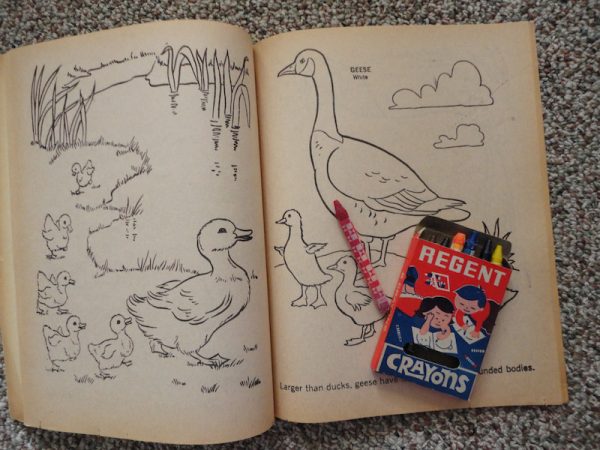
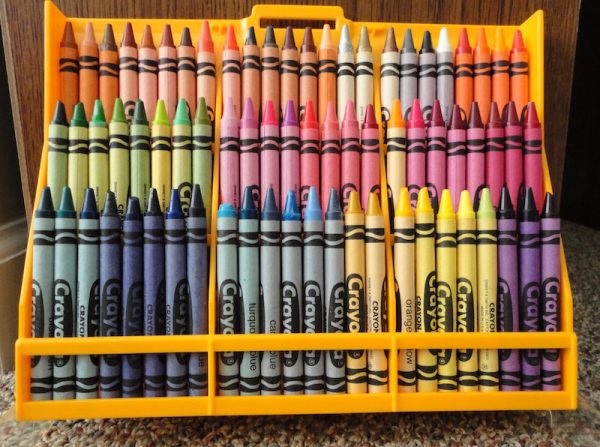
In 1990 my hus­band bought me a 72 set of Cray­olas in a plas­tic car­ry­ing case. It has both Green Blue and Blue Green (and sev­en oth­er col­ors retired lat­er that year). He under­stood my crav­ing for crayons. Open the box and sniff! Crayons smell like pos­si­bil­i­ty. They also smell like time: I am eight years old again and col­or­ing a pic­ture I’ve drawn. There is a con­stan­cy about crayons. Cray­ola may cre­ate new col­ors with some­times ridicu­lous names (Mac­a­roni and Cheese, Out­er Space) but the size, shape, and paper wrap­per remain the same.

Box of 72 Crayola crayons

Dur­ing my husband’s last weeks, when win­ter begrudged spring, I was des­per­ate to give him some­thing beau­ti­ful. I turned to a rem­e­dy that cured most ills. Pic­ture books couldn’t stall death, but they were all I had. I ordered two books by British illus­tra­tor Bri­an Wild­smith (1930 – 2016) whose unex­pect­ed use of col­or has daz­zled chil­dren since his first book in 1961.

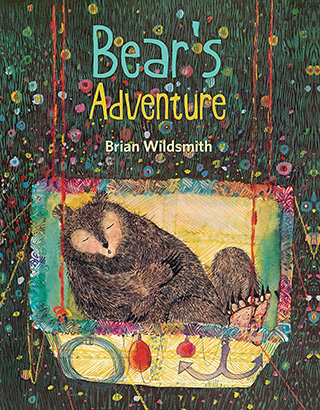
Bear's Adventure by Brian WildsmithIn Bear’s Adven­ture (1981), a bear falls asleep in the bas­ket of a hot-air bal­loon parked in a wild­flower mead­ow. He floats upward then down onto a city street. Wildsmith’s sky­scrap­ers, out­lined in medi­um blue and lip­stick pink, could have been ren­dered by an imag­i­na­tive child who smudged the scene with strokes of yel­low, red, and green. The bear wakes up in the mid­dle of a cos­tume parade, is rushed into a taxi to a stu­dio, and inter­viewed on television.

Col­or explodes on every page, from the kalei­do­scop­ic blades of a heli­copter (the bear finds him­self in sur­pris­ing places), to back­grounds soaked in oat­meal gray or stark white or pale pink splat­tered with magen­ta. It’s as if the child mak­ing these pic­tures grabbed any cray­on at hand. Wild­smith used water­col­or, col­ored pen­cil, and, it seems, what­ev­er else was with­in easy reach. The result is art that delights the eye, sure­ly cre­at­ed in joy­ous aban­don, com­bined with the wit­ty sto­ry of a blun­der­ing bear.

In truth, Wild­smith orches­trat­ed each of his illus­tra­tions in his mind before pick­ing up a brush. “I call it the ‘Mozart­ian Method,’” he said in an inter­view. “Mozart had the com­plete sounds in his head before he wrote them down … It’s like that for me. The sub­ject and the inten­si­ty of what has to be expressed deter­mine if I use a com­bi­na­tion of reds and blues, or if blue or yel­low is promi­nent … There’s a cer­tain intu­itive way of doing it.”

Often dubbed the “Magi­cian of Colour,” Wild­smith was raised in York­shire, Eng­land, a min­ing town that, in his words, was “grey, there wasn’t any colour.” Unwill­ing to go into the mines, he drew “air­planes dog­fight­ing and ships shov­ing each oth­er.” He aimed to be a sci­en­tist, yet veered in the direc­tion of cre­ativ­i­ty, attend­ing the Barns­ley School of Art and then, as a fish-out-of-water schol­ar­ship stu­dent, the Slade School of Fine Arts in Lon­don, where he was too poor to buy paints and brush­es. Maybe he had Cray­ola crayons, that inex­pen­sive stand-by art supply.

Cousins Edwin Bin­ney and Harold Smith found­ed Bin­ney & Smith in 1885, mak­ing dust­less chalk before they mat­ed paraf­fin and pig­ment to pro­duce sticks of col­or wrapped in paper. Head­quar­tered in Eas­t­on, Penn­syl­va­nia, Cray­ola crayons appeared in 1903, in red, blue, green, yel­low, orange, vio­let, brown, and black. Today, the fac­to­ry man­u­fac­tures 13 mil­lion durable crayons a day — 650 a minute — in 148 col­ors (some have been retired) that are packed in icon­ic green and yel­low box­es in sets of 8, 16, 24, 48, 64, 96, and 120.

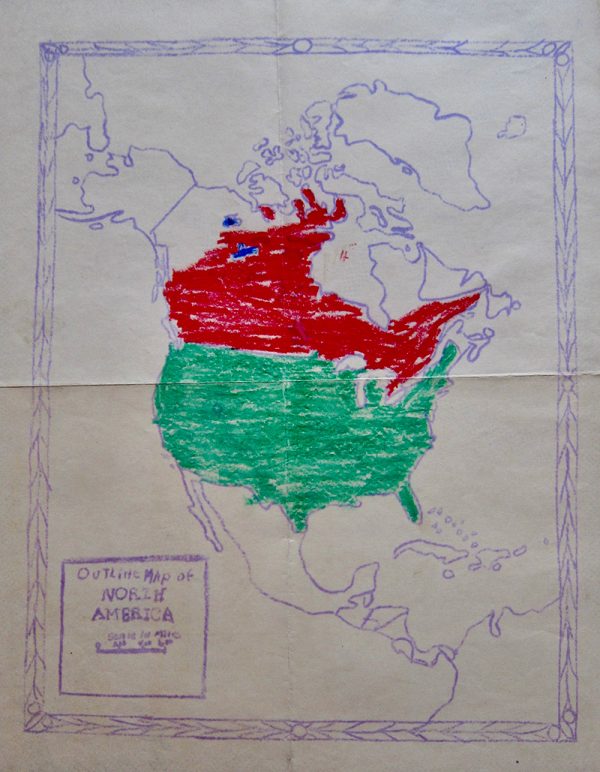
Among my husband’s few school papers is a mimeo­graph map he col­ored in red, green, and blue. After 85 years, the col­ors are as vibrant as the day he opened his box of stur­dy crayons.

Colored in map of North America

Humans first devel­oped a col­or sense to sur­vive. Col­or was nec­es­sary to iden­ti­fy ripe red fruit in a dense green for­est. Col­or allows us to iden­ti­fy objects, aids in mem­o­ry, and helps deci­sion-mak­ing. It also influ­ences mood. Bed­room walls paint­ed blue exude a feel­ing of seren­i­ty (though mine are shrimp pink, pop­u­lar in the 1940s). Yel­low kitchens con­vey cheer­ful­ness (mine is apple green, the col­or of my mother’s kitchen cab­i­nets in the 1960s).

After art school, Bri­an Wild­smith taught art and designed book cov­ers. His children’s book career began when he showed his port­fo­lio of abstract paint­ings to Mabel George, the children’s book edi­tor at Oxford Uni­ver­si­ty Press. He was assigned to cre­ate twelve paint­ings for the 1961 edi­tion of Tales from the Ara­bi­an Nights. A crit­ic panned, “We now descend to the low­est depths … these aim­less scrib­bles which… wan­der aim­less­ly and point­less­ly.” Unfazed, Mabel George real­ized that OUP had some­thing fresh and new in Bri­an. She asked him to do an ABC book.

Wildsmith’s 1962 ABC, accord­ing to The Guardian in 2006, “has an expres­sive, tac­tile qual­i­ty that chil­dren relate to instinc­tive­ly. The colours shout, sing or whis­per, and the brush strokes (even now) have a free­dom and spon­tane­ity that make you feel that the paint might still be wet.” Part of its suc­cess was George find­ing an Aus­tri­an fine art print­er, free­ing Wild­smith from the tedious col­or-sep­a­ra­tion process that bound most pic­ture book illus­tra­tors at the time. The book burst onto the “staid world of children’s pub­lish­ing” and cap­tured the Kate Green­away Medal. Children’s pic­ture books in the UK were nev­er the same.

More children’s books poured from Wildsmith’s paint pots. Some crit­i­cized his impres­sion­is­tic illus­tra­tions as too vivid, but chil­dren, hun­gry for col­or, loved them. Wild­smith was espe­cial­ly adept at paint­ing ani­mals, often in unex­pect­ed hues. He once said, “Every­thing is liv­ing: ani­mals, birds, bees, peo­ple, flow­ers, and each has its own soul. I try to express that inner soul.” Who’s to say that a rhi­noc­er­os’ soul isn’t pur­ple? Wild­smith believed his audi­ence was good at “read­ing” his illus­tra­tions. Words and art, he said, cre­at­ed an excit­ing experience.

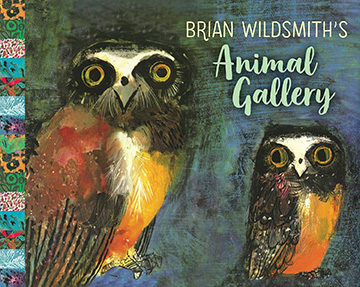
Animal Gallery by Brian WildsmithThe sec­ond Wild­smith book I bought to share with my hus­band, Ani­mal Gallery (2008), pairs col­lec­tive nouns of ani­mals with bold, expres­sive art. I bought the book after see­ing the spread “A stare of owls,” and dis­cov­ered the rest of the book is just as aston­ish­ing. A “par­ty of rain­bow fish” forms a rain­bow-arch across a dark sea back­ground so high­ly-tex­tured, you want to plunge your hand into that chilly water, believ­ing your wrist will slice its sur­face. My hus­band lin­gered over the deep jun­gle-green “A lepe of leopards.”

For an hour or so, he explored scenes in every shade imag­in­able, leav­ing the black and white con­fine­ment of can­cer to slink across grassy savan­nahs, wedge through riv­er reeds, amble over mead­owed hill­sides, and float sky­ward in a hot-air bal­loon with a slum­ber­ing bear. I couldn’t ask more of two very nec­es­sary pic­ture books.

For this essay, I retrieved my 72 set of crayons tucked in an old dry sink cup­board. When my par­ents died in 1987 and 1989, and the house I grew up in sold, I decid­ed to revive my child­hood dream of becom­ing a children’s book illus­tra­tor. I was 38 and had nev­er tak­en a sin­gle art class. I bought paints and paper and palettes, but my hus­band sur­prised me with that won­der­ful case of crayons, all the col­ors I would ever need, along with his stead­fast support.

I smell those unused crayons — pos­si­bil­i­ty! — and I am eight years old, mind and body engaged in mak­ing art. I am also 40, real­iz­ing I wasn’t good enough to become an illus­tra­tor. And I am 73, cry­ing over the gift of col­or and miss­ing the giv­er whose faith in me nev­er wavered. My life at present is most­ly gray, but I still bring home stacks of pic­ture books from the library. I need words and col­or now more than ever. I think maybe we all do.

Sources

Bri­an Wild­smith.” Cre­ative Inspi­ra­tion. Blog. March 11, 2014.

Bri­an Wildsmith’s web­site.

Carey, Joan­na. “Food for the soul.” The Guardian. May 13, 2006.

Gold­stein, Sam. “What’s in a Col­or? For Humans, a Great Deal.” Psy­chol­o­gy Today. May 8, 2025.

Mor­eil­lon, Judi. “Bri­an Wildsmith’s Mag­i­cal World of Col­or.” Chil­dren and Libraries. Summer/Fall 2008. Access through Course Hero or via Pro­quest at your local library.

Wild­smith, Bri­an. Ani­mal Gallery. Oxford Uni­ver­si­ty Press, 2008.

Wild­smith, Bri­an. Bear’s Adven­ture. Star Bright Books, 1981, 2018.

Wit­mer, Ann. “The new Cray­ola Expe­ri­ence of Eas­t­on: Not far by car.” Penn Live.com. May 16, 2013.

Subscribe
Notify of
guest

This site uses Akismet to reduce spam. Learn how your comment data is processed.

2 Comments
Oldest
Newest
Terri Evans
Terri Evans
3 months ago

This is so poignant and per­son­al. Beau­ti­ful­ly writ­ten. I am so sor­ry for your loss. Thank you for shar­ing this with us.

Tricia Springstubb
Tricia Springstubb
3 months ago

A writer friend of mind was stymied by grief and unable to write. She found her way back by begin­ning to draw with, yes, crayons. Thank you for shar­ing the col­ors of hope!