As a reader of “Bookology” it is probably a safe bet that you, like me, are fond of words since they are the foundation for a love of literacy. I also bet you are no stranger to affixes, such as the suffix “-ology” as in the lovely namesake of this beloved online publication.
According to www.etymonline, “-ology” is: “a word-forming element indicating “branch of knowledge, science,” now the usual form of ‑logy. Originally used c. 1800 in nonce formations (commonsensology, etc.), it gained legitimacy by influence of the proper formation in geology, mythology, etc., where the -o- is a stem vowel in the previous element.”
A quick brainstorm of related words might conjure up literary terminology like anthology or trilogy. Perhaps you recall teachers of biology, psychology, or sociology when reminiscing about high school or college days. If you or a loved one has ever had to deal with medical challenges, radiology, cardiology, endocrinology, dermatology, and oncology, could also be on your list. There are hundreds of English words that make use of “-ology” and while some are obscure and used infrequently, others are quite common and are an integral part of everyday English. I invite you to keep reading to learn where I’m going with this deep dive into the world of suffixes and lexicology.
For most of my career, my methodology for teaching kids how to read and write has always been infused with what I believed was robust vocabulary instruction which took place in a word rich classroom. I prided myself on being able to inspire striving readers to find joy in reading and writing. I shared wise words like “Lose yourself and find yourself in a good story” and “Reading allows us to travel the world in the pages of a good book.” I curated extensive, culturally diverse classroom libraries, stayed up to date on award winning books, and traveled around the country (even to New Zealand!) to meet exceptional authors and collect autographs. I gave kids authentic purposes and all the materials needed to create stories of their own, showcasing their ideas and ingenuity.
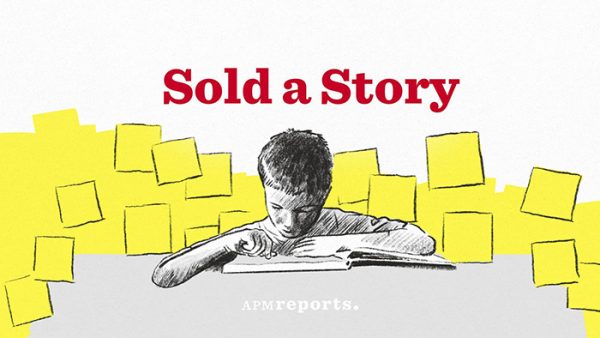
About seven years ago an investigative podcast called “Sold a Story” by journalist Emily Hanford, came out on APM (American Public Media — producer and distributor of radio and podcasts for public radio stations). Many listeners would agree that this six-part podcast served as a major catalyst for the “Science of Reading” (SoR) movement that took the nation by storm. Since 2018, the way we teach kids to read has undergone significant shifts, with many states having passed legislation changing the requirements for how schools teach literacy (including MN, with the READ ACT).
I must admit that I was skeptical about this resurgent wave stressing phonics instruction (which dates back to 1690 with the publication of the New England Primer). Hanford’s reporting also appeared to reignite the “reading wars” that raged through much of the 20th century. This article from Yale’s publication The Politic sums up the back and forth tug between phonics (SoR) and whole language/balanced literacy.
Despite my reservations about what felt like a seismic shift in literacy instruction, I’ve benefited greatly from the professional development mandated for educators in MN.
I’ve come to realize that the “art” of teaching literacy simply isn’t enough for kids who need a more systematic and structured foundation to “crack the code.” I still stand by all the things I offered in my teaching and yet I wish I could go back and take it a step further for all those learners who needed explicit lessons in phonology (the study of how sounds are organized and used in language to make meaning).
Fortunately, I have always embraced the ideology of the importance of being a lifelong learner. As a veteran educator, I find myself immersed in the adage “better late than never” as I take on the exciting exploration and discovery of helping kids unpack the wonderful world of words in the English language. Which brings us back to my rumination of affixes at the start of this column.
As a grade 4 and 5 teacher of English, I am intent on applying the recent knowledge I have acquired about word study. At this stage, almost all students have a good grasp of decoding (sounding out words) but still have areas of needed growth in encoding (writing/spelling) and comprehension. Morphology and etymology are the key to what’s been missing in my wonderful world of literacy. Opportunities for learners to study affixes and base words along with the history of words, provides a more logical, meaning based structure.
Three exceptional resources I have recently discovered to guide me on my “word nerd” journey are morpheme mapper, word torque and a Facebook group called Engage with the Page. If you are interested in creating “word sums”, exploring “word matrices” or investigating the difference between “free and bound” word bases, these links will be right up your alley.
I will leave you with some delightful book suggestions (suitable for ages 5 – 95) that combine the science and art of word study. And stay tuned for Part Two on this topic! I’ll be sharing a word study lesson on “Create-an-Ology” where students become “word detectives” and invent their own scientific field of study based on a new root word.
Books for ages 5 to 95 on the Science and Art of Word Study
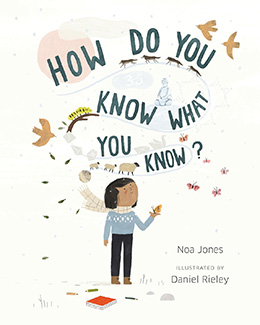
How Do You Know What You Know by Noa Jones and Daniel Rieley (Bala Kids). The perfect book for launching word inquiry! This charming story promotes curiosity with investigations of the origin of things with questions like “Where does snow come from?” or “What language did the word ‘thermos’ come from?”
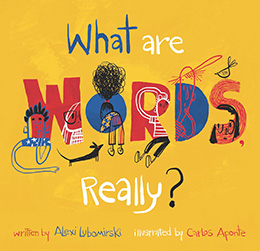
What are Words Really by Alexi Lubomirski and Carlos Aponte (Candlewick Press). The power of words is beautifully illustrated and celebrated in a gentle way to encourage readers to spread kindness by choosing words well and using them wisely.
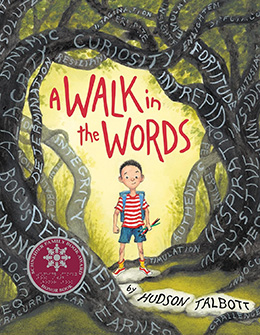
A Walk in the Words by Hudson Talbott (Nancy Paulsen Books). The magic of storytelling is unlocked in a forest of words in this sweet and sensitive story about a young boy who is an avid artist but struggles to read (inspired by the author’s lived experience).
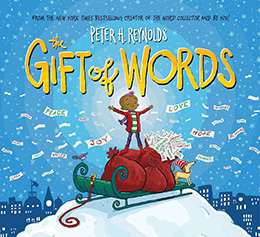
The Gift of Words by Peter H. Reynolds (Orchard Books). The word collector returns just in time for the holidays as he embarks on a mission to find words of hope, love and joy to share with his community.
Oh, Maurna, why does this not surprise me? You continue to inspire! Thank you for all you do!