
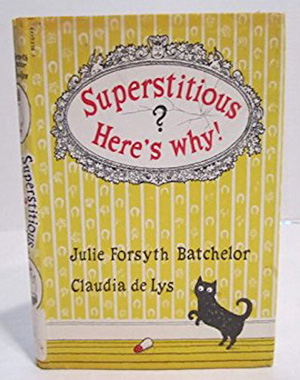
 A few years later, I checked out a book from my elementary school library called Superstitious? Here’s Why! The little black cat on the cover seemed familiar. Inside, chapters about superstitions were headed with humorous line drawings. In each was that black cat. Sometimes I had to look close to spot him. The person who had illustrated the book was listed on the title page — Erik Blegvad. Instantly I realized this person had also made the pictures for the Woman’s Day calendar. It wasn’t just the little cat. It was the precise way he drew.
At the age of ten I had uncovered a secret — artists didn’t make pictures only once. It was their job. Besides picture books, children’s fiction in the fifties and sixties usually included interior black and white artwork. Illustrations were part and parcel of novels. The Borrowers series was richer for its loose-lined art by Beth and Joe Krush. Garth Williams’ illustrations for Charlotte’s Web made the animals real. Louise Fitzhugh’s odd, off-center sketches perfectly suited her odd, off-center novels, Harriet the Spy and The Long Secret.
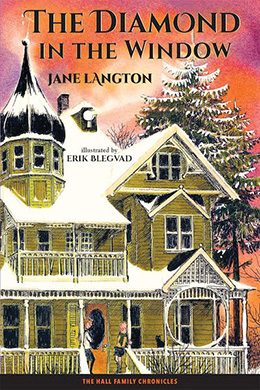 Erik Blegvad’s illustrations for my all-time favorite children’s novel, The Diamond in the Window by Jane Langton, made me want to live forever in the wedding cake Victorian house he depicted on the cover.
I tried copying that house, but my hesitant pencil was no match for Blegvad’s sure pen.
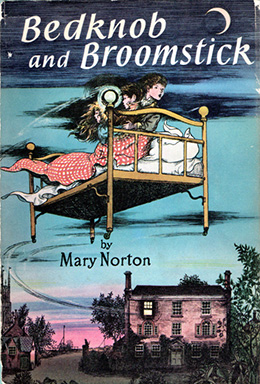 He was best known for his art for Bedknob and Broomstick, written by Mary Norton of The Borrowers fame. Inside illustrations feature his signature black cat but the dust jacket dazzles with a brilliant pink and blue twilight sky that makes me wish I could bottle those colors and drink them. Blegvad illustrated the first American version of The Borrowers, which was serialized in Woman’s Day magazine. He felt his scenes for The Borrowers were among his best.
 You’ll find only a skimpy Wikipedia page for an illustrator who was working on his 107th book when he died at the age of 90 in 2014. He won no big awards. He was a journeyman illustrator who loved to make art and was very good at it because he worked at his craft daily.
Erik Blegvad was born in Copenhagen, Denmark, in 1923. In his illustrated memoir, Self-Portrait: Erik Blegvad, he said, “My father, his father, and his father’s father all had drawing talent and all hoped to become artists: none of them did.”
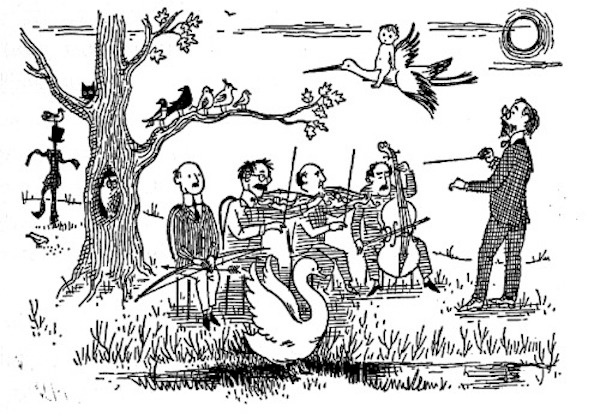
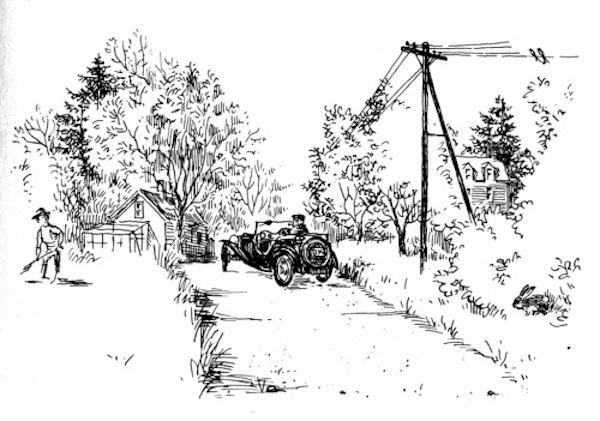
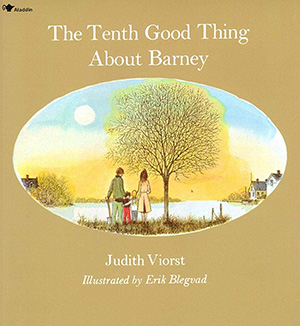 While in Paris, Blegvad met an American artist. He and Lenore married and moved to New York City. The first children’s book he illustrated was the somberly titled The Story of Peace and War by Tom Galt, in 1953. From then on, his pen kept busy. He illustrated the Woman’s Day calendars from 1955 to 2004. One of his best-known books is Judith Viorst’s The Tenth Good Thing About Barney.
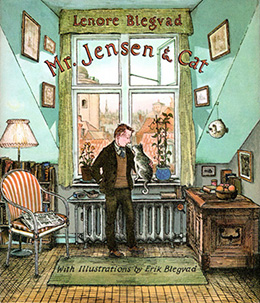 He illustrated his wife Lenore’s children’s books and collections of children’s poetry.
His editor asked him to translate and illustrate Andersen’s fairy tales.
In a lecture he gave at the Library of Congress in 1987, Blegvad admitted: “I looked forward to translating the tales, but the idea of illustrating Andersen did not appeal to me. This can best be explained by the enormous admiration I have always had for the illustrations in a volume of Andersen’s tales I knew in my childhood, drawings I knew and loved before I knew how to read.”
He fell in love with the pen and ink illustrations by Vilhelm Pedersen (1866). “It seems to me that the tales are best illustrated when the artist allows their subtle poetry and their understated quaint humor to be mirrored in the illustrations. The artist need not overemphasize; he need only suggest. His palette should never shine richer than Andersen’s printed word.”
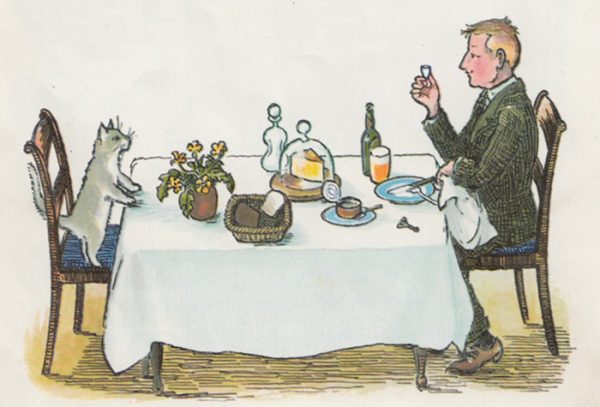
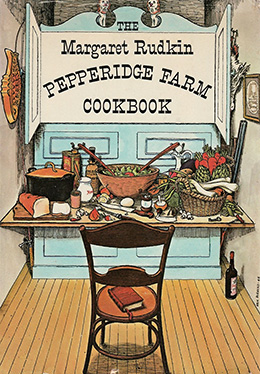 Blegvad’s biggest project was The Margaret Rudkin Pepperidge Farm Cookbook. In 1962, he was chosen to illustrate this tome of more than 400 pages and over 500 recipes. This was no ordinary cookbook, but rather part memoir, part recipe collection, part work of art.
Erik spent four months living on an abandoned plantation in Jamaica with his family while he churned out hundreds of drawings. The dust jacket front is illustrated in full-color, as is the back (a different scene). The paper-over-boards cover sports a full wrap-around color landscape. Endpapers are lavishly illustrated. Inside on every single double-spread are two or more vignettes, some in color. When published in 1963, this lavish cookbook was the first ever to be a New York Times best-seller. Erik did all that work wearing a three-piece suit and tie, his handlebar mustache impeccably groomed, as he did every day, no matter the weather.
(photo: Simon & Schuster)
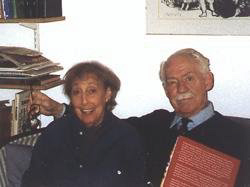
I met Erik and Lenore Blegvad at a reception at the Danish Embassy in Washington in the late 1980s. A friend wangled me an invitation. White-haired, straight-backed, elegantly-dressed, the Blegvads were Vikings. I nearly fainted when we were introduced and have no memory what I said. But I felt then as I still do that Erik Blegvad’s drawings set me to writing my own stories. I’ve wanted all my life to be an illustrator, too, but while I could teach myself to write, I needed training to be an illustrator. Sometimes it is enough to love something you can’t do.
I was lucky to stumble on that Woman’s Day calendar and luckier still to have weekly library periods in elementary school. Our library was small. Students in first to third grade could check out books from a single bookcase. But it was enough to give me my first delightful taste of picture books, help me develop visual literacy, and turn me into a lifelong reader.
Candice, there are so many delicious bits of information in this piece about Erik Blegvad. I’ve read it through three times and it repeatably triggers the equivalent of children’s literature endorphins in my mind. Thank you for your obvious love of the art and writing of books for children. Keep these wonderful articles coming!
Steve: Oh, how I loved this man’s art. I tried copying his buildings, his cats, and his trees. Of course I fell short and was never handy with pen and ink. You never know what will spark a child’s imagination. I’m glad I figured out as a kid to recognize art styles in children’s books. It was my own personal art history course! There will be more articles, you betcha.
I immediately recognized the cover for “Superstitious? Here’s Why!” a book I checked out (probably multiple times) from my elementary school library. Unfortunately my library doesn’t have Erik Blegvad’s memoir, but I just requested “Bed Knobs and Broomstick, with his illustrations. I’m eager to read it, pour over his drawings! Thank you, Candice!
David: Someone else read that book! I felt like the only kid in the universe who read the print off Superstitious? Here’s Why! My mother’s family, part English, part German, was amazingly superstitious people. So that book made me realize there were many more folkloric beliefs besides “Never put a hat on the bed or you’ll have bad luck.” (I still don’t.) Bedknobs is an eye-opener. Like you, I only came upon this book recently. Enjoy it when it comes!
This rich, delightful article brought back so many memories for me, not the least of which was my undying love for The Diamond in the Window. Thank you, Candace, for highlighting the whimsical magic of Erik Blegvad!
Apologies for misspelling your name, Candice.
It happens all the time. The latest, on a picture book coming out in January! Where are the copyeditors?
Joyce: I’m a huge fan of your books and use them when I teach poetry! But I’m an enormous fan of The Diamond in the Window. I had to be married on Valentine’s Day (in 2 feet of snow) because of the chapter “The Bride of Snow.” I started reading Thoreau because of this book. When I met Jane once, I told her how much the book meant to me. She was very kind and I later learned that I was the millionth person to tell her that. That book changed lives!