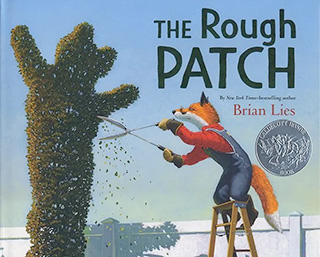
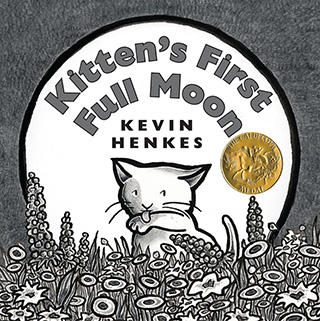
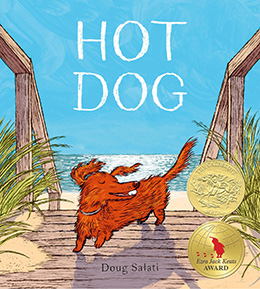
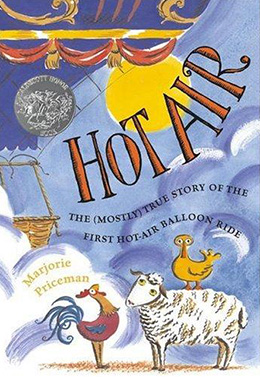
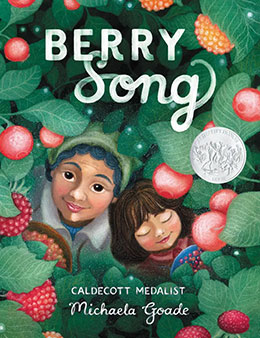
To instill or nurture an interest in gardening, five Caldecott Honor books feature the wonders that gardens hold as places providing sustenance, restoration, and a sense of mystery.
Picture books can foster a deeper appreciation for the “Earth’s beating heart,” our global ocean. From ocean shores to the depths of the sea, these five Caldecott award books transport readers to this extraordinary environment.
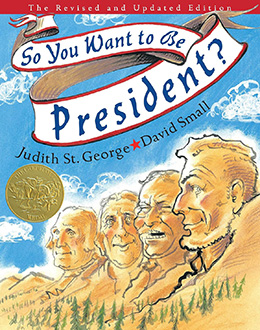
A close and fascinating look at the illustrations in three Caldecott books about political figures ... and how those books have been updated over the years.
Following up on Gail Nordstrom and Heidi Hammond’s Caldecott Lines of Connection article, “Food for Thought,” Gail decided to give artificial intelligence a challenge to write an article on the same topic. Here’s how it went down.
Sean Sherman, “In an epiphany, I tasted how food weaves people together, connects families through generations, is a life force of identity and social structure.” These formidable themes are central to recent Caldecott Award books.
According to multiple sources, being scared and overcoming our fear is good for us, and this is especially true when reading or listening to scary stories.
While experiences in the natural world are beneficial to both children and adults, they are especially crucial for young people. This selection of Caldecott Honor books invites readers to explore and appreciate the natural world.
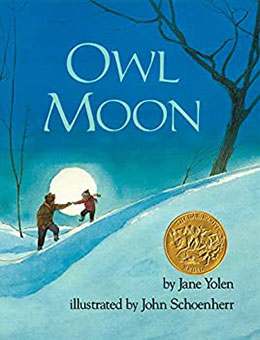
In the far reaches of the northern hemisphere, snow graces the winter landscape and shapes the activities of the season. Picture books set in winter typically feature snowy backdrops. This column takes a look at five Caldecott Award-winning snow stories.
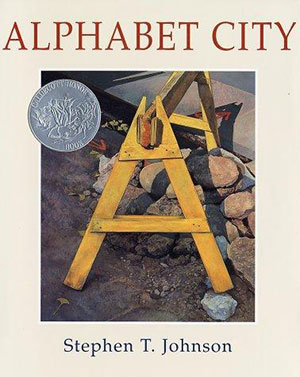
Not all alphabet books are for the purpose of early literacy, nor do they meet the criteria for traditional alphabet books ... Still others are thematically connected, as are the following Caldecott Honor ABC books.
Traditionally, alphabet books, or abecedaria, serve as beginning literacy instruction for babies and young children to promote letter, sound, and word development. But, greater potential than instruction exists in this form of picture books.
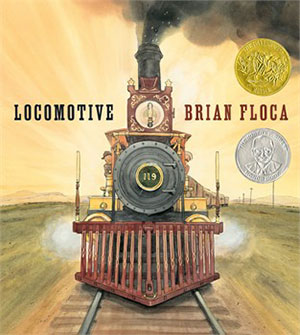
In the second part of our Transportation series, we look at Caldecott Award books that consider trains from different vantage points, from the outside or inside, from a real or fantastical world. Climb aboard!
From an early age, children are captivated by “things that go,” from climbing on trucks in a Big Rig library event to racing bicycles along a park path. This article offers a line-up of Caldecott Award books that feature various modes of land transportation.
In picture books, the illustrations often carry half, or more than half, of the narrative. Increased understanding of illustration techniques can enhance your appreciation and pleasure when reading and sharing picture books.
In Part 2 of Geography, we take a look at Caldecott winning and honored books with settings in Europe. Recognizable landmarks are among the illustrations in these books, giving a strong connection to location.
Many picture books have anonymous settings, but some include authentic landmarks identifying locations that can be pinpointed on a map. Traveling from west coast to east coast, several Caldecott Award books feature settings in the United States, and we can become armchair travelers through the illustrations.
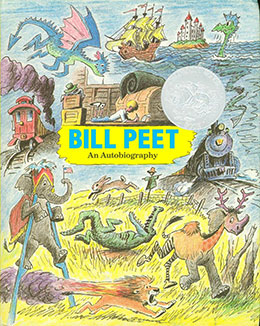
When considering picture book biographies of visual artists, one cannot overlook the three illustrators who have garnered Caldecott Honors for their autobiographical works: Bill Peet, Uri Shulevitz, and Peter Sis.
With declining funding for arts education in schools1,2 and limited opportunities for school-sponsored class visits to art museums, Caldecott Award-winning picture books invite children to explore various media and styles of art deemed “distinguished.”3 Indeed, as professor of English and children’s literature specialist Philip Nel observes, “Good picture books are portable art galleries.”4
A number of Caldecott award books extend the art enrichment experience by introducing children to the lives and works of visual artists.
Trina Schart Hyman’s retelling of “Little Red Riding Hood” is a familiar one. This was Hyman’s favorite fairy tale, and as a child, she spent a whole year wearing the red cape her mother made for her. On the verso of the title page, Little Red is reading her own story featuring the cover of Hyman’s book, sucking her thumb, just as Hyman did in childhood.
The universal appeal of fairy tales is documented by the similarities of stories across countries, cultures and centuries. The “Cinderella” story alone is over 1000 years old with over 1000 varients. What makes an individual picture book version of a fairy tale unique? The illustrations. Jane Yolen (2004) states, “Many of the picture-book retellings of folktales are more about the art than the story” (p.
Fictional Caldecott grandparents reveal interesting and surprising personalities. While the stories are imaginary, some of the characters are inspired by admired grandparents and mentors.
The typical post-World War II nuclear family was sidelined during the political and societal turmoil of the 1960s. Due to divorce, remarriage, and blended families, the 21st century has seen an increasing number of grandparents involved in their grandchildren’s lives. To celebrate Grandparents Day in September, this article examines the portrayal of grandparents and great-grandparents in selected Caldecott Medal and Honor books.
Peter McCarty doesn’t just include his dog, but also his cat in Hondo and Fabian, a 2003 Caldecott Honor book. This story describes a day in the life of his pets. Hondo goes to the beach while Fabian stays home, but both have a good time. The soft pencil illustrations of the yellow Labrador retriever and the gray tabby on the front jacket cover are matched with photographs of the real Hondo and Fabian on the back jacket flap.… more
It is almost guaranteed that children will respond favorably to animal stories, especially stories with dogs and cats. Two-thirds of American households own dogs or cats. Nineteenth century British illustrator Randolph Caldecott seemed to understand the natural affinity between children and animals. Before science documented the importance of pets in children’s lives, he included animals in most of his illustrations, and they added to the frolicking fun that animated his scenes.… more
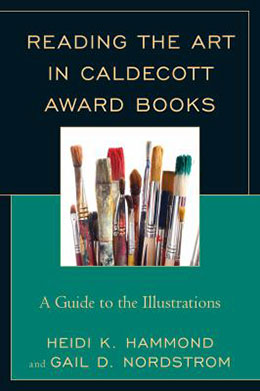
For this interview, we visit with Heidi Hammond, associate professor at St. Catherine University in the MLIS program, long-time school librarian, and author of Reading the Art in Caldecott Award Books: a Guide to the Illustrations, along with co-author Gail D. Nordstrom.
Which celebrity, living or not, do you wish would invite you to a coffee shop?… more